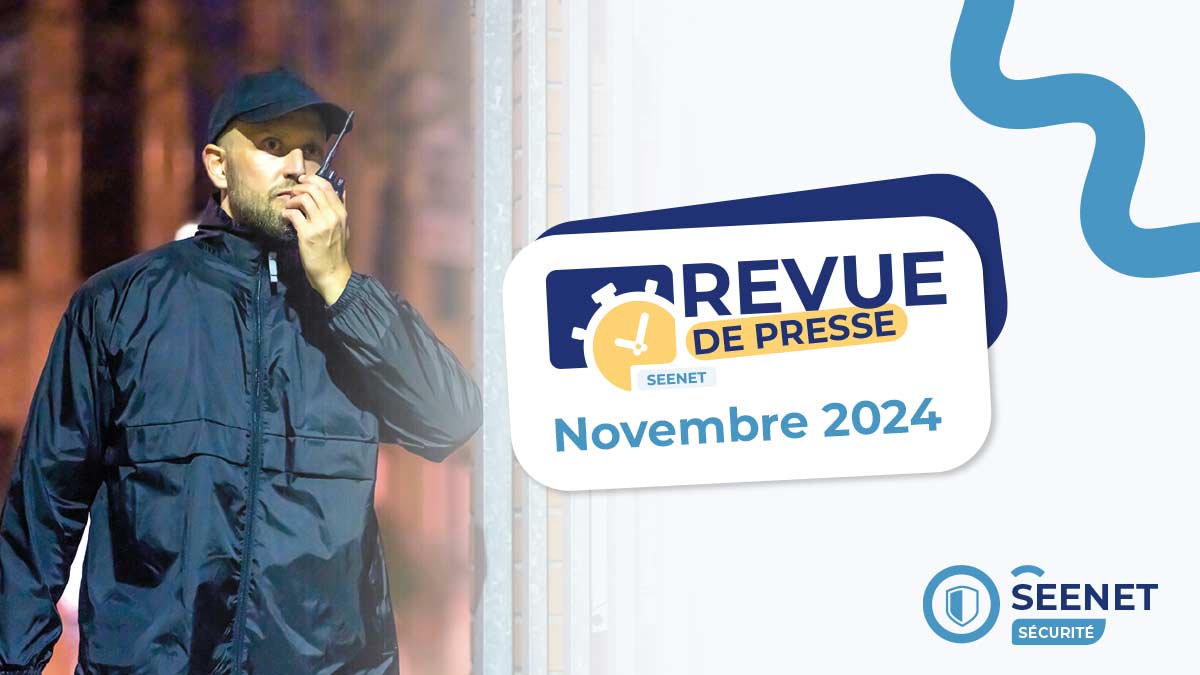
Introducing the SENEF and Seenet Sécurité Press Review. This monthly press review is a digest of all the latest news from the security and guarding sector. Discover the November Press Review.
The feminization of the sector
Visit November 12, 2024, the GES – Private Security has signed a Partnership with the association «Women in Security».», marking a significant step forward in the feminization of the sector. This initiative aims to Promote the place of women in private security, a field still often mistakenly perceived as reserved for men.
Partnership objectives :
- Raise awareness the public and companies to gender diversity.
- To value Inspiring women's journeys in the sector.
- Encourage young girls to consider a career in the security professions.
The partnership reflects the common ambition to change mindsets and increase female participation, whether on the field, in coaching, or in leadership positions, to build a sector that is more representative of society.
Strengthening the role of the CNAPS
Private security: an essential question posed by MP Julien Rancoule
The Member of Parliament for Aude questioned the Minister of the Interior about the absence of the CNAPS in decree no. 2022-1284, suggesting a necessary evolution to strengthen regulation and transparency in this key sector. Discover the issues and perspectives.
Background and challenges
As private security increasingly plays a role in protecting property and people, issues of transparency and ethics remain crucial. An article published on May 13, 2024, had already highlighted the shortcomings of the current system in handling whistleblower reports. These inconsistencies have sparked a constructive reaction from National Council for Private Security Activities (CNAPS).
The CNAPS's position
The CNAPS reminded that, according to decree no. 2022-1284, the Defender of Rights remains the competent authority to handle ethical reporting. However, the organization also has its own internal mechanisms for collecting and processing reports through the «Alert Us» form on its website. This system guarantees a rapid and appropriate response to non-compliant behavior.
Written question no. 2179: a gap to fill
In a written question from November 19, 2024, Julien Rancoule highlighted the absence of the CNAPS as a recognized authority in the decree on the ethics of private security activities. He advocates for the CNAPS, like the Defender of Rights, to be able to directly receive reports from whistleblowers. This recognition would strengthen the regulation and integrity of the sector, while effectively protecting the general interest.
Call for legislative change
Decree no. 2022-1284 needs to be amended to explicitly include the CNAPS as a key player in receiving and processing alerts. Such an amendment would make it possible to:
- Increased surveillance and a swift response to offenses.
- A dual reporting channel increases the chances of detecting deviant behavior.
- Greater transparency and integrity in private security.
By strengthening the role of CNAPS, the Ministry of the Interior could consolidate the regulation of the sector and ensure increased protection for whistleblowers, thus contributing to more reliable and exemplary private security.
22 % less than cleaning
Private security guards, despite increased responsibilities and strict training requirements, receive lower salaries than cleaning staff, with gaps ranging from 2 % to 22 % according to the positions. This imbalance is aggravated by less favorable bonuses and increases in private security, particularly for night work (10 % versus 20 % in cleaning) and public holidays.
Key points:
- Comparison with the cleaning sector :
- Cleaners enjoy higher overall hourly wages and better bonuses.
- Team leaders and managers in cleaning are particularly advantaged.
- Security guard job requirements :
- Rigorous training: certifications such as SSIAP, canine training, airport security, with regular refresher courses.
- Strict morality: professional card issued by the CNAPS after investigation, with possible suspension in the event of an incident.
- High-risk: management of incivilities, theft prevention, surveillance of sensitive sites, with exposure to danger.
- Professional context :
- The agents work in a demanding environment, subject to a strict code of ethics and constant pressure.
- The slightest failure can lead to penalties or the loss of their accreditation.
Issues:
This lack of pay does not reflect the qualifications, responsibilities and risks associated with the job. A upgrading pay scales is essential for recognizing the commitment of agents, attracting and retaining qualified professionals, and ensuring the sustainability of this crucial sector.
To discover September's press review, , this is where it all happens.